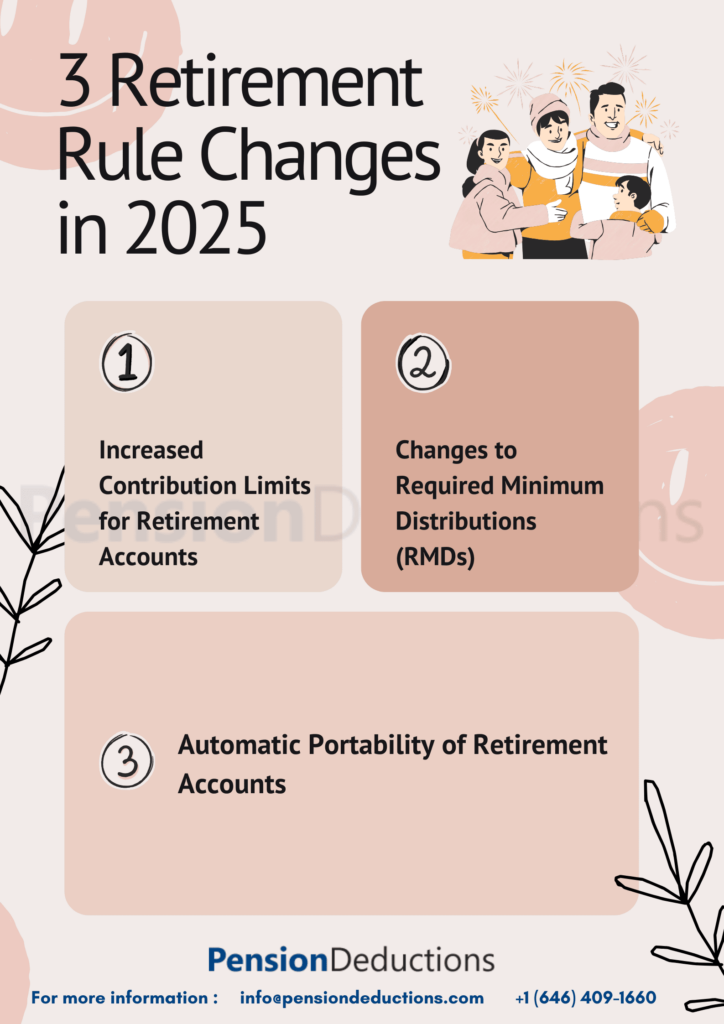

3 Retirement Rule Changes in 2025: What You Need to Know
1. Increased Contribution Limits for Retirement Accounts
One of the most significant retirement rule changes in 2025 is the increase in contribution limits for tax-advantaged accounts like 401(k)s and IRAs.
Key Updates for 2025
401(k) Contribution Limits
IRA Contributions Limits
Traditional and Roth IRA limits will likely see modest increases, allowing individuals to contribute up to $7,000 or $8,000 depending on age.
Impact on Savers
2. Changes to Required Minimum Distributions (RMDs)
RMD Age Increase
In 2024, the RMD age was 73. For 2025, this age is increasing to 74, providing retirees with another year to grow their investments tax-deferred.
For younger savers, the long-term outlook points to an RMD age of 75 by 2033 under the SECURE Act 2.0.
Penalty Reduction
The penalty for missing an RMD has been reduced from 50% to 25%, and even further to 10% if corrected promptly.
Strategies to Optimize RMDs
Roth
Conversions
Qualified Charitable Distributions (QCDs)
Schedule a Free Consultation Now!
3. Automatic Portability of Retirement Accounts
What is Automatic Portability?
Why It Matters?
Prevent Lost
Savings
Reduce Early Withdrawals
How to Prepare
Other Noteworthy Updates for Retirement Rule Changes in 2025
Catch-Up Contributions and Income Thresholds
Expanded Access for Part-Time Workers
FAQs
Conclusion
Pension Deductions is here to help you navigate these changes with expert guidance, tools, and resources. Stay informed and make 2025 the year you maximize your retirement potential.
SHARE THIS POST

Discover the top 10 retirement trends 2026—from Roth adoption and AI planning tools to SECURE Act updates and cash balance plans.

Discover how EE and ER pension plans are making a comeback in 2025 and what this means for employers and employees seeking better retirement security.

Under SECURE Act rules, you can still set up retirement plans for last year’s taxes. Learn deadlines, benefits, and tax savings.

Learn everything about pension deductions in 2025—rules, limits, and strategies to maximize retirement tax savings for business owners.