Sustainability and Funding in Defined Benefit Plans
Understanding Sustainability and Funding in Defined Benefit Plans
Understanding Defined Benefit Plans
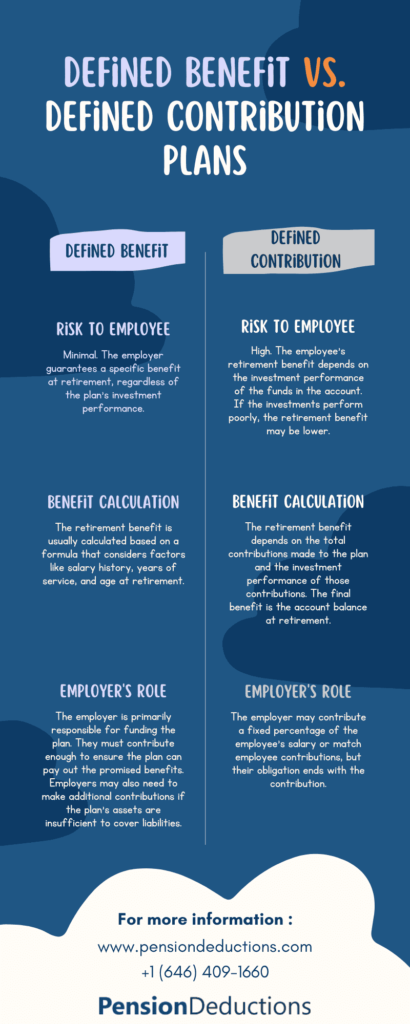
Sustainability Challenges in Defined Benefit Plans
Another major concern is the volatility of investment returns. Defined Benefit Plans rely heavily on investment income to meet their long-term obligations. However, market fluctuations can lead to funding shortfalls, especially when investment returns fall short of expectations. This unpredictability in returns can severely impact the Sustainability and Funding in Defined Benefit Plan.
Funding Challenges in Defined Benefit Plans
A key issue affecting the Sustainability and Funding in Defined Benefit Plan is the low-interest-rate environment that has persisted over the last decade. Lower interest rates increase the present value of future liabilities, requiring higher contributions from employers to keep the plan fully funded. This has led to significant funding gaps in many plans, forcing employers to either increase contributions or seek alternative solutions.
Regulatory and Legislative Responses
Despite these efforts, many plans continue to face significant funding challenges. The role of government-sponsored programs, such as the Pension Benefit Guaranty Corporation (PBGC), has become increasingly important. The PBGC provides a safety net for participants in underfunded plans but is itself facing financial difficulties, raising concerns about its ability to fulfill its obligations in the long term.
Strategies for Enhancing Sustainability and Funding
Another strategy involves the use of pension risk transfer (PRT) solutions, such as annuity buyouts and buy-ins. These solutions allow employers to transfer some or all of the plan’s liabilities to an insurance company, thereby reducing the plan’s exposure to investment and longevity risks. While PRT can be an effective way to manage risks, it also requires careful consideration of the costs and implications for plan participants.
Plan sponsors are also exploring ways to increase contributions and improve plan governance. This includes re-evaluating the plan’s funding policy, enhancing investment oversight, and exploring opportunities for cost-sharing with employees. By taking a proactive approach, sponsors can help ensure the Sustainability and Funding in Defined Benefit Plan for the long term.
The Future of Defined Benefit Plans
The ongoing challenge will be to balance the needs of retirees with the financial realities faced by employers. This will require innovative solutions, strong governance, and continued support from policymakers. By addressing these challenges head-on, we can help ensure that Defined Benefit Plans remain a viable option for providing retirement security in the years to come.
Conclusion
SHARE THIS POST
The defined benefit plan calculator 2026 gives you a number in 2 minutes. But most business owners don’t know what drives it, why age matters so much, or how their entity type changes the input. Here’s the complete 2026 guide with real contribution examples by age, income, and business structure.
Attorney retirement plan 2026. Here is the complete 2026 retirement plan guide for attorneys & law firm owners by practice structure, income level, & age.
If your business sponsors a 401(k)/Cash Balance/Defined Benefit Plan, Form 5500 deadline 2026 is July 31, 2026. Penalties of $2,739 per day.
SECURE 2.0 gives small business owners a dollar-for-dollar tax credit of up to $5,000 per year. Defined Benefit Plan Tax Credit 2026. Learn More!