As we navigate the complexities of retirement planning, ensuring a secure financial future becomes a priority for many Americans. One important guideline in this realm is the Retirement Security Rule. Understanding this rule is crucial for individuals looking to enhance their retirement savings and ensure financial stability during their golden years. In this blog, we will delve into the specifics of the Retirement Security Rule, how it works, its implications, and its significance in the context of retirement planning in the United States.
The Retirement Security Rule is a guideline that provides insights into the appropriate level of retirement savings individuals should aim to achieve. This rule serves as a foundational tool for financial planning, helping people estimate how much they need to save to secure a comfortable retirement. While many factors influence retirement needs, the Retirement Security Rule emphasizes the importance of a well-structured saving strategy to meet future expenses.
The Retirement Security Rule has evolved over time as a response to changing economic conditions and the shifting landscape of retirement planning. As more individuals have transitioned from traditional pension plans to defined contribution plans like 401(k)s, understanding how much to save has become increasingly complex. The rule aims to simplify this process, providing a benchmark that individuals can use as a reference point when planning for retirement.
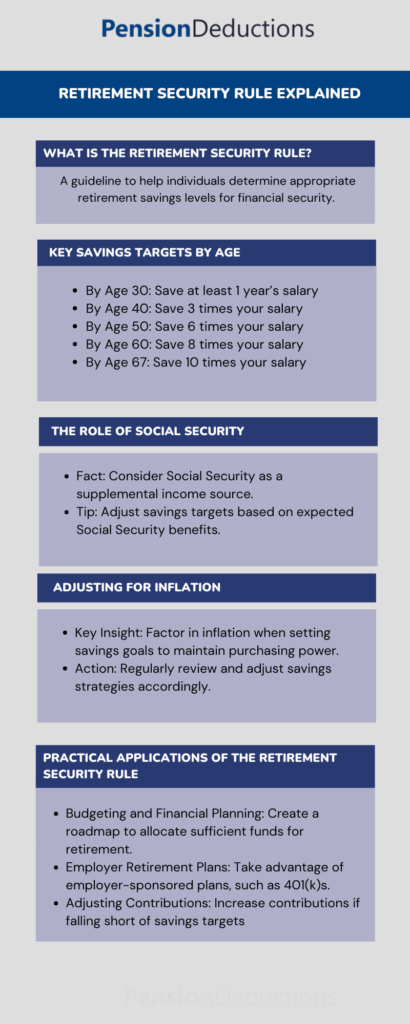
At the core of the Retirement Security Rule are recommended savings targets based on age. These targets help individuals gauge their progress towards a financially secure retirement. Here are some general guidelines:
These benchmarks serve as a roadmap, encouraging individuals to save consistently and assess their progress as they approach retirement.
One critical aspect of the Retirement Security Rule is the consideration of inflation. As the cost of living increases, the purchasing power of savings can diminish over time. Therefore, it is essential for individuals to factor in inflation when setting their retirement savings goals. The rule emphasizes that simply saving a fixed amount may not be sufficient if inflation rates exceed expectations.
The Retirement Security Rule also takes into account the potential benefits from Social Security. While Social Security can provide a significant source of income during retirement, it is not designed to cover all expenses. The rule suggests that individuals should view Social Security as a supplemental income source and not rely solely on it for their financial needs. By factoring in potential Social Security benefits, individuals can adjust their savings targets accordingly.
The Retirement Security Rule can be a powerful tool for budgeting and financial planning. By understanding the recommended savings targets, individuals can create a roadmap for their finances, ensuring they allocate sufficient funds toward retirement savings. This proactive approach can help individuals avoid financial stress as they approach retirement age.
Many employers offer retirement savings plans, such as 401(k)s, that align with the principles of the Retirement Security Rule. These plans often include employer contributions, which can significantly boost an individual’s retirement savings. Understanding the Retirement Security Rule can motivate employees to take full advantage of these employer-sponsored plans and maximize their retirement contributions.
As individuals assess their savings progress in light of the Retirement Security Rule, they may realize the need to adjust their contributions. For those who find themselves falling short of the recommended targets, increasing contributions to retirement accounts can be a critical step in securing a more comfortable retirement. Whether through salary increases, bonuses, or windfalls, prioritizing retirement savings can have a significant impact on long-term financial security.
One of the challenges individuals face when adhering to the Retirement Security Rule is economic uncertainty. Factors such as market fluctuations, rising living costs, and changes in employment can affect an individual’s ability to save adequately. It is essential to maintain flexibility in retirement planning, adjusting savings strategies as needed to adapt to changing circumstances.
Debt can also pose a significant barrier to achieving the savings targets outlined in the Retirement Security Rule. High levels of consumer debt can limit the ability to allocate funds toward retirement savings. Individuals should prioritize debt repayment strategies alongside their retirement planning efforts. By addressing debt concerns, individuals can free up resources for retirement contributions.
A lack of financial literacy can hinder individuals from fully grasping the implications of the Retirement Security Rule. Understanding investment options, retirement accounts, and effective saving strategies is crucial for successfully implementing the rule. Educational resources and financial literacy programs can empower individuals to make informed decisions about their retirement savings.
Navigating the intricacies of retirement planning can be overwhelming. Seeking professional guidance from financial advisors can provide individuals with personalized strategies tailored to their unique situations. Financial advisors can help individuals assess their current savings, set realistic goals based on the Retirement Security Rule, and create a comprehensive retirement plan that considers various factors, including investments and risk tolerance.
A financial advisor can assist individuals in customizing their retirement plans to align with their specific needs and goals. This personalized approach can ensure that individuals are on track to meet the benchmarks set forth by the Retirement Security Rule while considering their individual financial situations.
Staying informed about changes in laws, regulations, and investment options is vital for effective retirement planning. Financial advisors can provide insights into relevant developments that may impact retirement savings strategies. Being proactive and informed can enhance individuals’ ability to adapt to shifting economic conditions and maximize their retirement security.
In conclusion, the Retirement Security Rule serves as a valuable framework for individuals looking to secure their financial future. By understanding the recommended savings targets, adjusting for inflation, and factoring in potential Social Security benefits, individuals can create a robust retirement savings plan. While challenges such as economic uncertainty and debt management may arise, proactive planning and professional guidance can help individuals navigate these obstacles effectively.
Embracing the principles of the Retirement Security Rule empowers individuals to take control of their financial destinies, ensuring they are well-prepared for a comfortable and secure retirement. Whether you are just starting your career or approaching retirement age, understanding and implementing the Retirement Security Rule can significantly impact your financial well-being. Start today by assessing your savings progress and making the necessary adjustments to achieve your retirement goals.